
Erectile Dysfunction, Men's Health
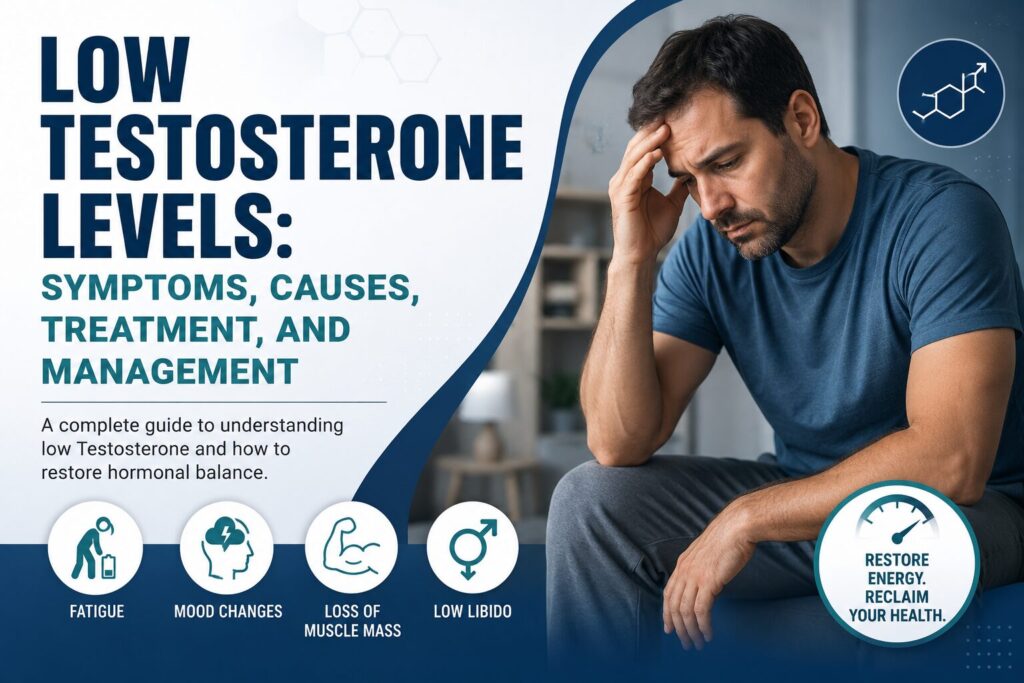
Low Testosterone Levels: Symptoms, Causes, Treatment, and Management
Jun
Testosterone is a vital hormone that plays an important role in maintaining overall health and well-being. Although it is commonly known as a male sex hormone, women also produce Testosterone in smaller amounts. In men, Testosterone helps maintain muscle mass, bone density, energy levels, libido, and reproductive health. In women, it contributes to sexual desire, mood regulation, bone strength, and body composition.
When Testosterone levels fall below the normal range, it can lead to various physical, emotional, and sexual health concerns. Understanding the causes, symptoms, and treatment options for low Testosterone can help individuals seek timely medical care and improve their quality of life.
What Is Low Testosterone?
Testosterone is primarily produced in the testes in men and the ovaries in women. It plays a crucial role in maintaining muscle strength, bone health, sexual function, and overall vitality.
Low Testosterone in men is commonly referred to as male hypogonadism, a condition in which the testes fail to produce adequate amounts of the hormone. In women, low Testosterone occurs when the ovaries produce less Testosterone than required for normal bodily functions.
According to the American Urological Association (AUA), Testosterone levels below 300 nanograms per deciliter (ng/dL) are generally considered low in adult men. In women under the age of 50, Testosterone levels of 25 ng/dL or lower may indicate a deficiency.
Symptoms of Low Testosterone
One of the most common signs is persistent fatigue or low energy levels.
Common symptoms include:
- Reduced libido or sexual desire
- Fatigue and lack of energy
- Loss of muscle mass and strength
- Increased body fat
- Mood changes, including depression and irritability
- Difficulty concentrating
Symptoms in Men
Men with low Testosterone may experience:
- Erectile dysfunction (ED)
- Reduced sexual performance
- Decreased sperm production
- Reduced frequency of spontaneous erections
Symptoms in Women
Women with low Testosterone may notice:
- Reduced libido
- Vaginal dryness
- Irregular menstrual cycles
- Lower energy levels and decreased motivation
Causes of Low Testosterone
Several factors can contribute to low Testosterone levels, including aging, lifestyle habits, medical conditions, and psychological health.
Aging
Testosterone production naturally declines with age. Men typically experience a gradual decrease in Testosterone levels as they grow older. Women also begin to experience a decline in Testosterone during their thirties, with levels continuing to decrease as they approach menopause.
Lifestyle Factors
Certain lifestyle choices can negatively impact Testosterone production, including:
- Excessive alcohol consumption
- Poor nutrition
- Lack of physical activity
- Chronic sleep deprivation
- High levels of stress
Some studies also suggest that intense physical training without adequate recovery may influence hormone levels, particularly in women.
Medical Conditions
Several health conditions are associated with low Testosterone, including:
- Obesity
- Diabetes
- Metabolic disorders
- Pituitary gland disorders
- Chronic illnesses
Mental Health Factors
Psychological conditions such as chronic stress, anxiety, and depression can affect hormone production and contribute to lower Testosterone levels.
Treatment Options for Low Testosterone
Treatment depends on the underlying cause and the severity of symptoms. A healthcare professional can recommend the most appropriate approach after evaluating hormone levels and overall health.
Lifestyle Changes
Healthy lifestyle modifications may help support natural Testosterone production, including:
- Regular aerobic and resistance exercise
- Maintaining a healthy weight
- Limiting alcohol consumption
- Getting adequate sleep
- Managing stress effectively
Testosterone Replacement Therapy (TRT)
Testosterone Replacement Therapy is one of the most common treatments for clinically low Testosterone levels. TRT may be administered through:
- Gels
- Patches
- Injections
- Oral medications
This treatment can help improve energy levels, libido, muscle mass, and overall quality of life when prescribed appropriately.
Testosterone replacement therapy can be administered through various methods, including gels, patches, oral medications, and injections. If you’re exploring injectable TRT, check out “Does Testosterone Need to Be Injected Into the Muscle?” to understand the benefits, procedure, and effectiveness of intramuscular Testosterone injections.
Counseling and Mental Health Support
If stress, anxiety, or depression contribute to low Testosterone levels, therapy or counseling may help address the underlying psychological factors.
Important Safety Considerations
Testosterone therapy should only be used under medical supervision. Improper use or excessive doses may increase the risk of side effects, including:
- Mood changes
- Sleep apnea
- Acne
- Fluid retention
- Increased red blood cell count
- Cardiovascular complications in some individuals
Always consult a qualified healthcare provider before starting any Testosterone treatment.
Conclusion
Low Testosterone can affect men, impacting physical health, emotional well-being, and sexual function. Common symptoms include fatigue, reduced libido, mood changes, and loss of muscle mass. Factors such as aging, lifestyle habits, medical conditions, and mental health issues can contribute to declining Testosterone levels.
Fortunately, several treatment options are available, ranging from lifestyle improvements and stress management to Testosterone Replacement Therapy. Seeking professional medical advice is essential for obtaining an accurate diagnosis and developing a safe and effective treatment plan.
Frequently Asked Questions
What is considered a low Testosterone level?
In adult men, Testosterone levels below 300 ng/dL are generally considered low. In women, normal levels vary by age, but levels below 25 ng/dL may indicate a deficiency.
What are the common symptoms of low Testosterone?
Common symptoms include fatigue, reduced libido, loss of muscle mass, increased body fat, mood changes, and decreased energy levels. Men may also experience erectile dysfunction, while women may experience vaginal dryness and menstrual irregularities.
How is low Testosterone treated?
Treatment options may include lifestyle modifications, stress management, counseling, and Testosterone Replacement Therapy (TRT) through gels, patches, injections, or oral medications.
What are the risks of untreated low Testosterone?
Long-term low Testosterone levels may contribute to reduced bone density, osteoporosis, sexual dysfunction, fatigue, mood disorders, and an increased risk of certain cardiovascular issues.
Can women experience low Testosterone?
Yes. Women can develop low Testosterone levels, which may lead to reduced libido, fatigue, mood changes, decreased muscle mass, and changes in menstrual patterns.
