
Erectile Dysfunction, Men's Health
Best Testosterone Boosters for Erectile Dysfunction: Do They Really Work?
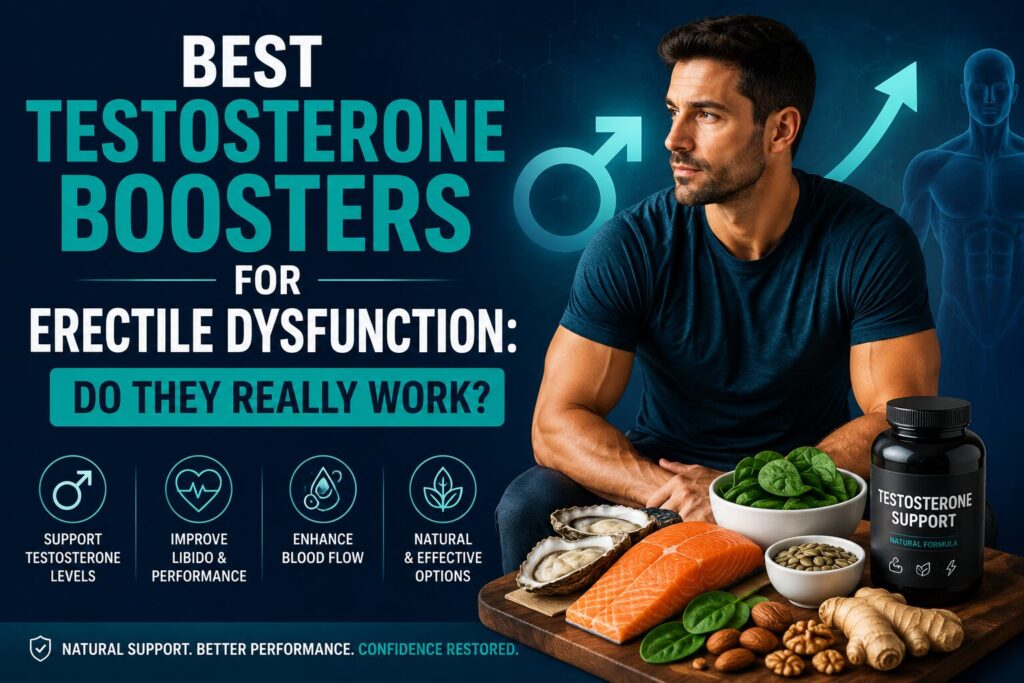
Jun
Erectile Dysfunction (ED) affects millions of men worldwide and can make it difficult to achieve or maintain an erection suitable for sexual activity. While ED can result from several physical and psychological factors, low testosterone levels may contribute to symptoms in some men.
As a result, many people wonder whether testosterone boosters can help improve erectile function and sexual performance. But do they actually work, and which options are worth considering?
This guide explores the connection between testosterone and ED, the role of testosterone boosters, and the natural and medical options available for managing erectile dysfunction.
Understanding the Link Between Testosterone and Erectile Dysfunction
Testosterone is the primary male sex hormone and plays an important role in several bodily functions, including:
- Sexual desire (libido)
- Sperm production
- Muscle growth and strength
- Bone health
- Mood and energy levels
Healthy testosterone levels support normal sexual function. When testosterone levels drop, men may experience reduced libido, lower energy, and difficulty maintaining sexual performance.
However, low testosterone is not the sole cause of erectile dysfunction. Many cases of ED are linked to poor blood flow, diabetes, cardiovascular disease, stress, anxiety, or certain medications. This is why identifying the underlying cause is essential before choosing a treatment.
What Are Testosterone Boosters?
Testosterone boosters are supplements, foods, or nutrients marketed to support the body’s natural testosterone production. Unlike Testosterone Replacement Therapy (TRT), which involves prescription testosterone administered under medical supervision, testosterone boosters do not contain testosterone itself.
Instead, they may provide nutrients or herbal ingredients that support hormone production and overall health.
Best Natural Testosterone Boosters for Erectile Dysfunction
Although no natural supplement can guarantee improved erectile function, some nutrients and foods may help support healthy testosterone levels.
Fatty Fish
Fatty fish such as salmon, sardines, and mackerel are rich in omega-3 fatty acids, vitamin D, and essential minerals. These nutrients support hormone production and overall cardiovascular health, both of which are important for sexual function.
Shellfish
Oysters, clams, and other shellfish are excellent sources of zinc, a mineral involved in testosterone production. Maintaining adequate zinc levels may help support healthy hormone balance.
Leafy Green Vegetables
Vegetables such as spinach, kale, and Swiss chard contain magnesium, which may help support normal testosterone levels, particularly in individuals with magnesium deficiency.
Fenugreek
Fenugreek is a popular herbal supplement often included in testosterone-support formulas. Some studies suggest it may help improve libido and support healthy testosterone levels.
Ginger
Known for its anti-inflammatory and antioxidant properties, ginger may support reproductive health and overall well-being. Some research suggests it could have a positive effect on testosterone production.
D-Aspartic Acid
D-Aspartic Acid is an amino acid involved in hormone regulation. While research results are mixed, some studies have found temporary increases in testosterone levels among certain individuals.
Zinc
Zinc is one of the most important minerals for testosterone production and male reproductive health. Men with zinc deficiency may benefit from increasing their intake through diet or supplementation.
Tribulus Terrestris
Tribulus Terrestris is a traditional herbal remedy commonly marketed as a testosterone booster. While it may help support libido in some individuals, evidence for significant testosterone increases remains limited.
Can Testosterone Boosters Cure Erectile Dysfunction?
If erectile dysfunction is primarily caused by low testosterone levels, improving hormone levels may help restore sexual desire and improve symptoms. However, if ED results from poor circulation, diabetes, stress, anxiety, or other medical conditions, testosterone boosters alone are unlikely to solve the problem.
For this reason, a professional medical evaluation is important before starting any supplement regimen.
Medical Treatments for Erectile Dysfunction
When ED is caused by impaired blood flow, healthcare providers may recommend prescription medications such as:
- Sildenafil (Viagra)
- Tadalafil (Cialis)
These medications do not increase testosterone levels. Instead, they work by improving blood flow to the penis, making it easier to achieve and maintain an erection during sexual stimulation.
For men diagnosed with clinically low testosterone, a healthcare provider may also consider Testosterone Replacement Therapy (TRT) when appropriate.
Want to improve erectile function naturally? Check out our guide on Best Foods for Erectile Dysfunction (ED) to learn which foods may support better blood flow and sexual health.
Conclusion
Low testosterone levels can contribute to erectile dysfunction, particularly by reducing libido and sexual desire. However, ED often has multiple causes, and testosterone deficiency is only one possible factor.
Natural testosterone-supporting foods and nutrients such as fatty fish, shellfish, zinc, fenugreek, ginger, and leafy green vegetables may help support healthy hormone levels. However, they should not be considered a substitute for professional medical treatment.
If you are experiencing persistent erectile dysfunction, consult a healthcare professional to determine the underlying cause and identify the most effective treatment option.
Frequently Asked Questions
Can low testosterone cause erectile dysfunction?
Yes. Low testosterone can contribute to erectile dysfunction by reducing libido and affecting sexual performance. However, many other factors can also cause ED.
Do testosterone boosters really work?
Some testosterone boosters may help support healthy hormone levels, particularly in individuals with nutrient deficiencies. However, results vary, and many supplements have limited scientific evidence.
Which foods naturally support testosterone levels?
Fatty fish, shellfish, eggs, leafy green vegetables, nuts, and zinc-rich foods may help support healthy testosterone production.
Can testosterone boosters replace ED medications?
No. Testosterone boosters and ED medications work differently. Prescription ED medications improve blood flow, while testosterone boosters aim to support hormone production.
When should I see a doctor about erectile dysfunction?
You should consult a healthcare professional if erectile dysfunction occurs frequently, persists for several weeks, or affects your quality of life and relationships.
